AI Agent Observability
Your AI agent is slow, expensive, and occasionally producing unexpected outputs — but you can't tell which step is the problem. TrueWatch AI agent observability unifies Sessions, Traces, Spans, model calls, tool execution, token consumption and cost, and risk events in one place, so you can find answers in real data instead of guessing.
product features
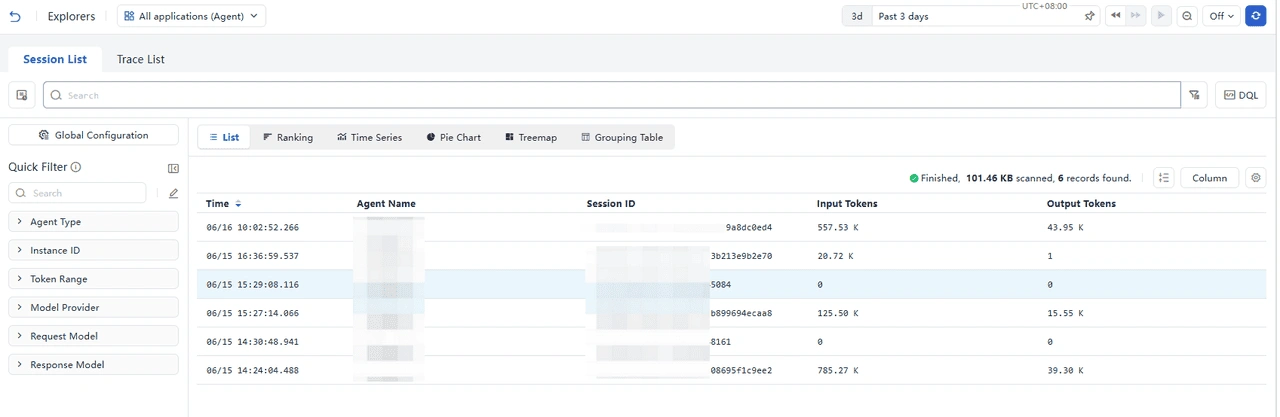
Filter sessions and traces to isolate your AI agent's risk events
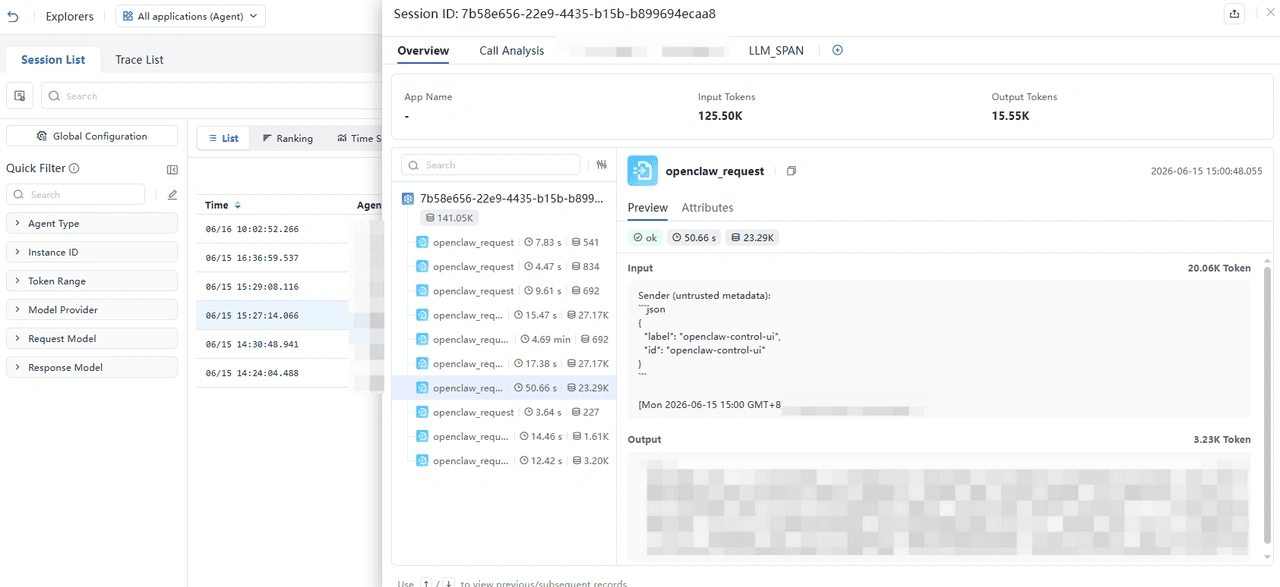
Your AI agent's total sessions, high-risk count, average trace volume, and risk event distribution — all visible before you drill in. Filter by application, risk level, token range, Session ID, or Trace ID to zero in on exactly the session or record that matters.
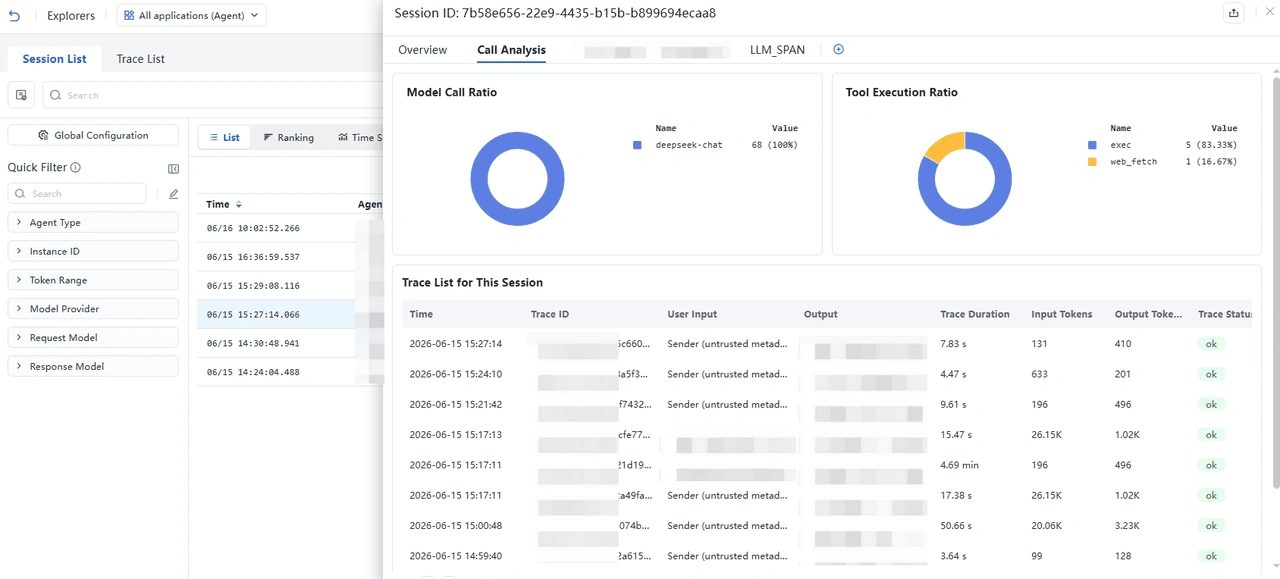
AI guardrail hits, tool execution failures, and risk events — one view
The call analysis view brings together your AI agent's tool execution details, risk events, rule triggers, and status logs. When AI guardrail rules fire, sensitive content appears, or a tool times out, jump directly to the relevant Span and call context — no tab-switching required.
Waterfall tracing for AI agents across LLM calls, tool chains, and RAG
Trace details render as a waterfall showing model inference, tool calls, knowledge base retrieval, and each Span's latency and sequence. For multi-turn reasoning, tool chains, or RAG monitoring scenarios, you can pinpoint exactly which node the latency is concentrated in — then inspect its inputs, outputs, and attributes.
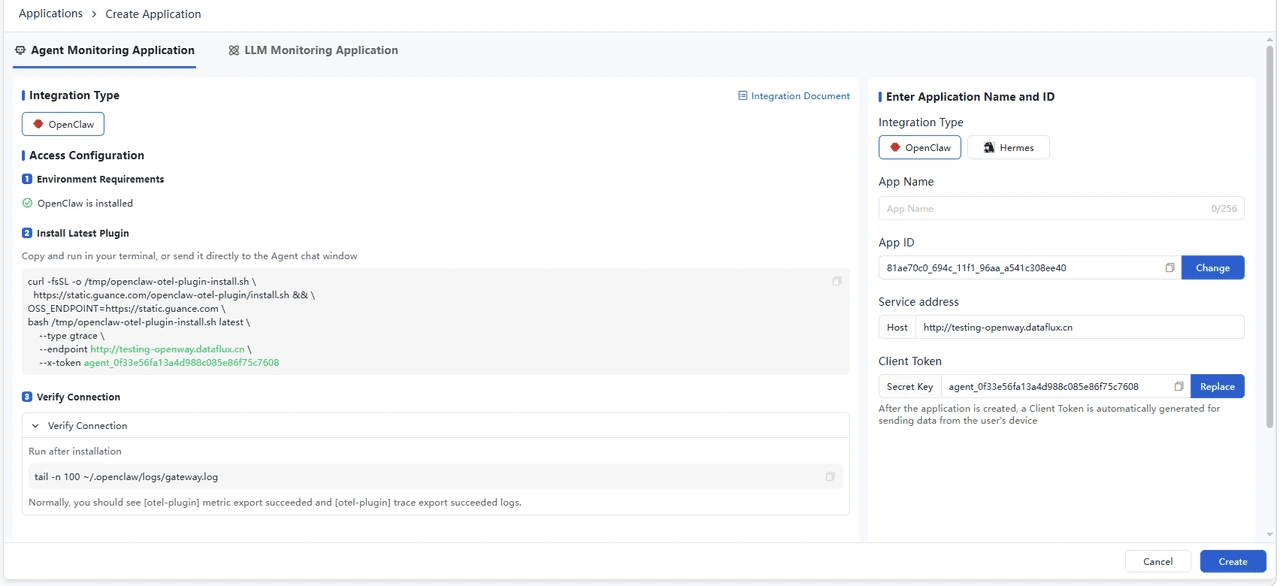
Unified AI agent monitoring and LLM observability by application
Create application IDs, service addresses, and Client Tokens through your AI agent monitoring app and LLM monitoring app. Traces, logs, metrics, and call records are then grouped by application — giving you LLM observability at the app level instead of a pile of disconnected logs.